

What if the future had already arrived — and someone turned it off?
Somewhere between the crackle of a Tesla coil and the silence of a forgotten garage in El Paso, between the mountain streams of Austria and the limestone blocks of a Florida castle built by one frail man working alone in the dark — a different version of the world was assembled. A world powered by water. A world lit by frequencies. A world shaped by geometry hidden inside the human heart.
It was built quietly, obsessively, often without funding, without recognition, and almost always without protection.
And then, one by one, it was taken apart.
The ten men in this article were not fringe lunatics or basement cranks. They were a microscopist whose work appeared in the Journal of the Franklin Institute. A forester whose timber-transport system was verified by a German university. A sculptor who discovered the first new geometric solid since ancient Greece. An electrical engineer whose AC power system still runs every light in your home. A mechanic from Texas who drove 200 miles on less than two gallons of gas — in front of witnesses, on the record, with a patent to prove it.
They were real. Their work was real. And for reasons that range from the mundane to the deeply unsettling, the world moved on without them.
History remembers the victors — the men whose inventions could be metered, monetized, and controlled. It has been far less kind to those who offered something that couldn’t be contained. These ten paid the price for that: in poverty, in obscurity, in courtrooms, in prison, and in some cases, on the floor of a restaurant parking lot with their last words being “they poisoned me.”
This is not a conspiracy theory. This is a reading of the record.
These are the names you were never taught. These are the ideas that didn’t disappear — they were buried.
It’s time to dig.
1. Nikola Tesla (1856–1943)
The Man Who Lit the World — and Could Have Freed It

No figure on this list is more celebrated — or more emblematic of suppressed genius — than Nikola Tesla. Born in Serbia in 1856 and transplanting himself to America at age 28, Tesla held at least 311 patents across 27 countries and is responsible for technologies that still power civilization today.
His greatest gift to humanity was the Alternating Current (AC) electrical system. While Thomas Edison fiercely pushed direct current — which couldn’t travel more than a mile without severe energy loss — Tesla’s polyphase AC system could transmit electricity across vast distances with minimal loss. His partnership with George Westinghouse culminated in the hydroelectric plant at Niagara Falls in 1895, the first large-scale proof of concept. The entire modern electrical grid descends from it.
Tesla’s Suppressed Inventions
1. Wardenclyffe Tower — Free Wireless Power for the World
Tesla’s most ambitious project was the Wardenclyffe Tower (1901–1917) on Long Island, New York — a 187-foot wooden lattice tower topped with a 68-ton copper dome, designed to tap the Earth’s own electrical resonance and broadcast power wirelessly to every point on the globe. The vision was breathtaking: free electricity for everyone, transmitted through the ionosphere without wires or meters. Financier J.P. Morgan, who had bankrolled the project, withdrew funding when he reportedly learned the system couldn’t be monetized — you couldn’t charge people for power they received from the air. Without funding, the tower stood idle, was seized for debt, and demolished for scrap during World War I. Tesla called it the greatest tragedy of his life.
2. The Teleforce “Death Ray” — A Weapon to End All War
In 1934, at age 78, Tesla announced the development of a device he called Teleforce — popularly dubbed a “death ray” by the press. The device, Tesla explained, was not a ray at all but a particle beam accelerator capable of projecting a concentrated stream of charged particles through the air at such velocity that it could destroy aircraft, power plants, or armies from hundreds of miles away. Tesla’s stated purpose was entirely defensive: a nation in possession of such a weapon would be invincible to aerial attack, making war itself obsolete. He spent years trying to interest the U.S., British, Soviet, and Yugoslav governments. The Soviet Union reportedly paid him $25,000 for a packet of technical data. When Tesla died on January 7, 1943, in his room at the New Yorker Hotel, representatives of the Office of Alien Property — not the FBI — immediately seized all of his papers, which were later reviewed by MIT physicist John G. Trump. Trump’s official report concluded nothing of immediate war-value was found, though classified documents related to the Teleforce were reportedly retained. Tesla’s complete papers were not returned to public access for decades.
3. The Earthquake Machine — Mechanical Resonance Oscillator
Around 1898, Tesla invented a small steam-powered mechanical oscillator — a device that produced precisely tuned vibrations at a controlled frequency. He claimed that during an experiment in his Manhattan laboratory, the oscillator locked onto the resonant frequency of the surrounding building and began shaking it — and potentially several city blocks — so violently that he had to destroy the device with a hammer before police arrived. Tesla later claimed that with a device the right size, tuned correctly, he could split the Earth in two. Modern structural engineering confirms that resonance-induced failure in large structures is real; the Tacoma Narrows Bridge collapse of 1940 is perhaps the most famous example. Whether Tesla’s claims about the scale of his oscillator’s effects were exaggerated remains debated, but the principle was sound.
4. The Tesla Turbine — Frictionless, Bladeless Engine
In 1913, Tesla patented the Tesla Turbine — an engine with no blades. Instead of the conventional design of a fluid pushing against turbine blades, Tesla’s device used the boundary layer effect: fluid flowing between a series of smooth, closely-spaced rotating discs would adhere to the disc surfaces and transfer rotational energy through viscosity alone. The turbine was extraordinarily efficient, lightweight, and capable of running on steam, combustion gases, or compressed air. It was also nearly impossible to manufacture to the tolerances Tesla required with the machining technology of his era. Several modern companies have revisited the design, and the bladeless turbine principle is now used in some niche industrial and biomedical applications.
5. Wireless Radio Transmission — A Credit Stolen for Decades
Tesla demonstrated a radio-controlled boat at Madison Square Garden in 1898 — four years before Marconi’s transatlantic transmission — using a device he called a “teleautomaton.” Marconi’s 1901 claim of priority was accepted by the Nobel Committee, and Marconi received the 1909 Nobel Prize for radio. Tesla challenged the claim. In 1943 — seven months after Tesla’s death — the U.S. Supreme Court overturned Marconi’s key radio patent, affirming Tesla’s priority. History has been slow to update the textbooks.
“The present is theirs; the future, for which I really worked, is mine.” — Nikola Tesla
“The day science begins to study non-physical phenomena, it will make more progress in one decade than in all the previous centuries of its existence.”
— Nikola Tesla
2. Viktor Schauberger (1885–1958)
The Water Wizard Who Watched Nature Think

Viktor Schauberger was an Austrian forester — and one of the most original minds of the 20th century. His method was unusual: rather than conducting laboratory experiments, he spent years sitting beside mountain streams, observing water in motion. What he saw convinced him that modern civilization was doing almost everything backward.
Schauberger’s central insight was that nature operates through implosion — inward, centripetal, cooling, concentrating motion — while industrial humanity operates exclusively through explosion — outward, centrifugal, heating, dispersing force. He believed implosive motion was the animating principle behind all living systems, from how water flows downhill in a stream to how sap rises against gravity in a tree, and that tapping it could unlock virtually unlimited clean energy while regenerating the natural world.
The Repulsine — Schauberger’s Implosion Disc
What Was the Repulsine?
The Repulsine (sometimes called the Repulsator) was a disc-shaped device Schauberger developed in the early 1940s, built around his theory that a fluid spinning in an inward vortex — an implosion spiral — would create a lifting force and generate its own motive power. The device featured a series of wave-form channels cut into rotating copper discs. When spun at high speed, air or water drawn into these channels was forced into a tightening spiral, accelerating and cooling as it moved inward — the inverse of an explosion. Schauberger believed this created a region of extreme low pressure at the centre that would both lift the device and generate electrical charge.
The Nazi Connection
During World War II, Schauberger was conscripted by the SS. Under the auspices of Heinrich Himmler’s technical research programs, he was ordered to develop his implosion technology for military purposes — reportedly including propulsion for experimental aircraft. Working at the Mauthausen concentration camp with prisoner engineers, Schauberger later claimed he was forced to continue work on the Repulsine under threat of execution. A prototype reportedly lifted off the ground spontaneously during a test, rising rapidly and crashing into the ceiling before the power could be cut. The original prototype, he stated, was destroyed when Allied forces approached. Whether the device achieved genuine anomalous lift — or whether Schauberger’s account was embellished over time — is impossible to verify; the wartime records were scattered or destroyed.
America, the Deal, and the Death
After the war, Schauberger was held and debriefed by American forces for nine months. He returned to Austria, continued publishing and lecturing, and developed a reputation as one of Europe’s most provocative independent scientists. In 1957, he was invited to the United States by a Texas-based group called Donner und Blitzen (later identified as associated with private aerospace interests). They flew him to America, set him up in a laboratory, and had him sign over the complete rights to all of his inventions and research. Days after returning to Austria, Viktor Schauberger was dead. He told his son before he died: “They took everything from me.”
The Legacy: Vortex Science Today
Schauberger’s son Walter, a physicist, spent decades attempting to validate his father’s theories mathematically. His earlier, provably successful invention — the spiral log flume of 1922, which used cold spiraling water to float timber uphill and over mountains, cutting transport costs by ~90% — was verified at the Technical University of Stuttgart in 1952. Schauberger’s ideas about vortex water treatment, structured water, and imploding flow have since attracted serious interest from hydraulic engineers and environmental scientists. The PKS Institute (Pythagoras-Kepler-System) in Bad Ischl, Austria, which his son founded, continues to study his work.
“Comprehend and copy Nature.” — Viktor Schauberger
3. Tom Ogle (1950–1981)
The Mechanic Who Got 100 Miles Per Gallon — and Disappeared

Tom Ogle was not an academic. He was a mechanic from El Paso, Texas, who worked in his home garage — and who, by 1977, had developed a fuel system so efficient it shook the foundations of the automotive and petroleum industries.
Ogle’s device — which he called the Oglemobile Vapor Fuel System — replaced the conventional carburetor, fuel pump, and gasoline tank entirely. Rather than spraying liquid gasoline into an engine’s intake manifold (a wildly inefficient process in which a significant percentage of fuel passes through unburned), Ogle’s system used engine vacuum and waste heat from the coolant to convert gasoline into a pure vapor inside a sealed steel tank. This vapor — ultra-fine, fully atomized fuel — was then drawn directly into the engine at precise ratios controlled by the throttle. The result: near-complete combustion, drastically reduced exhaust emissions, and extraordinary fuel economy.
In June 1977, Ogle drove a 4,600-pound 1970 Ford Galaxie — a famously gas-hungry vehicle — from El Paso to Deming, New Mexico and back: a round trip of approximately 200 miles. He used less than two gallons of fuel. Witnessed by journalists and engineers, the demonstration yielded an independently estimated 100+ miles per gallon. The story was picked up by Popular Mechanics and Argosy magazines. Ogle appeared on television. For a brief, electric moment, it seemed like the future of transportation had arrived from a garage in West Texas.
Ogle was granted U.S. Patent No. 4,177,779 on December 11, 1979 — a vapor fuel economy system for internal combustion engines that, per the patent text, could achieve “mileage in excess of one hundred miles per gallon.” The patent is publicly accessible and describes the system in technical detail.
Then came the resistance. Ogle gave interviews claiming his life had been threatened, his shop broken into, and that agents of oil companies were monitoring him. Engineers and industry representatives attacked the system on technical grounds — concerns about vapor pressure safety, long-term seal degradation, and the challenge of maintaining consistent air/fuel ratios across all load conditions in production vehicles. Whether these were legitimate engineering concerns or strategic obstruction remains a matter of debate.
Tom Ogle died on August 19, 1981, at age 31. The official cause: an overdose of alcohol and Darvon (a painkiller). The death was ruled accidental. His prototype never reached production. His patent, while publicly held, was never commercially developed. The vapor fuel concept he pioneered has since inspired dozens of independent researchers, and the principle of fuel vaporization as an efficiency improvement has been quietly validated in niche industrial combustion applications — just never in a car on a showroom floor.
“I’ve solved the fuel problem. Now they’re trying to suppress me.” — Tom Ogle, in a 1977 interview
4. Stanley Meyer (1940–1998)
The Man Who Used Water as Fuel — and Died Saying He Was Poisoned

Stanley Allen Meyer was an Ohio inventor who spent the 1970s and 1980s developing what he called the Water Fuel Cell — a device that could split ordinary water into hydrogen and oxygen using far less electrical energy than conventional electrolysis requires, then burn the resulting gas to power an internal combustion engine. The implications were staggering: an inexhaustible, zero-emission fuel source available from any tap, river, or puddle.
Meyer’s most dramatic demonstration was a dune buggy he ran on water alone. On an Ohio television broadcast, he stated that the vehicle could travel from Los Angeles to New York on 22 gallons of water. He described replacing conventional spark plugs with “injectors” that introduced a hydrogen-oxygen mixture into the cylinders after the water had been split by his resonance process — not by brute-force electrolysis, he insisted, but by a precision oscillating electrical field tuned to the natural resonant frequency of the water molecule itself. The concept bore intriguing conceptual similarities to how a microwave oven energizes water molecules, and Meyer held numerous patents describing his resonant electrolysis approach.
The scientific establishment was skeptical. In 1996, two Ohio investors who had purchased regional licensing rights to Meyer’s technology sued him after he failed to deliver a working, independently verifiable system. In court, three expert witnesses — including an electrical engineering professor — examined Meyer’s hardware and concluded it was operating on standard electrolysis with no anomalous efficiency. The court found Meyer had committed “gross and egregious fraud” and ordered him to repay the investors $25,000.
Two years later, on March 20, 1998, Meyer sat down to lunch at a Cracker Barrel restaurant in Grove City, Ohio, with his brother and two Belgian investors. Before the meal was finished, he ran outside to the parking lot, collapsed, and died within hours. His last reported words to his brother were: “They poisoned me.” The Franklin County coroner ruled the cause of death a cerebral aneurysm.
Meyer’s story sits in one of the most contested spaces in the history of alternative energy: a charismatic inventor with a genuinely intriguing theoretical framework, a court finding of fraud, and a dramatic sudden death. His supporters point to his patents, his demonstrations, and the suspicious timing. His critics point to the court ruling and the absence of any independently replicated positive result. What is undeniable is that the physics he appealed to — resonant water splitting, hydrogen as a fuel, and the extraordinary energy density of the hydrogen-oxygen bond — are all real phenomena.
“Water is the fuel of the future.” — Stanley Meyer
5. Royal Raymond Rife (1888–1971)
The Man Who Killed Disease With Light

In the 1930s, Royal Rife built a device so powerful it seemed like science fiction: the Universal Microscope — an optical instrument he could magnify living organisms at the sub-cellular level using prism-based illumination that preserved the organisms alive, which conventional electron microscopes of the era could not do. A detailed technical description appeared in the Journal of the Franklin Institute in 1944.
Using this microscope, Rife identified what he believed was a cancer-causing microorganism — which he called the BX virus — and then sought its Mortal Oscillatory Rate (MOR): the precise electromagnetic frequency at which it would vibrate apart and die, the same principle by which a specific musical note can shatter a crystal wine glass. His Beam Ray device delivered these targeted frequencies to patients. A 1934 clinical trial — supervised by a Special Medical Research Committee from USC — reportedly treated 16 terminal cancer patients with dramatic results.
Then, systematically, everything unraveled. His laboratory was vandalized. His business partner, Philip Hoyland, sued him in a dispute that bankrupted their company. The AMA’s Morris Fishbein — who had a well-documented history of attacking therapies that competed with pharmaceutical medicine — turned his attention to Rife’s associates. Rife descended into alcoholism, his health collapsed, and he died in 1971, largely forgotten by mainstream medicine.
6. Edward Leedskalnin (1887–1951)
The One-Man Builder of an Ancient Wonder

Edward Leedskalnin was a frail Latvian immigrant who weighed less than 100 pounds. Between 1920 and 1951, working alone — almost exclusively at night, with no crew and no heavy machinery that anyone could document — he quarried, carved, and erected over 1,100 tons of oolite limestone into a sprawling monument in Florida now known as the Coral Castle, listed on the National Register of Historic Places in 1984.
The structures are staggering: a 9-ton revolving gate so perfectly balanced that a child could push it open with one finger; a 30-ton monolith; two 25-foot standing stones; and a working sundial accurate to within two minutes. Modern engineers who examined the gate found Leedskalnin had drilled a perfectly centered hole and balanced the stone on a truck bearing — elegant leverage engineering. When asked how he moved such masses alone, he answered cryptically: “I understand the laws of weight and leverage, and I know the secrets of the people who built the pyramids.”
Beyond the construction, Leedskalnin authored four pamphlets on a personal theory of individual magnetic currents — arguing that conventional electromagnetic theory was incomplete and that matter was composed of interacting north and south magnetic monopoles. Unvalidated by mainstream science, the writings are nonetheless remarkably systematic for a man with a fourth-grade education.
7. Walter Russell (1871–1963)
The Renaissance Man Who Rewrote the Cosmos

Walter Russell was a sculptor, painter, architect, property developer — and cosmologist. He sculpted portrait busts of Thomas Edison and Mark Twain, won the commission for the Mark Twain Memorial, and served as a motivational lecturer for IBM for 12 years.
In May 1921, Russell described experiencing a profound 39-day illumination — a revelatory episode that gave him direct intuitive knowledge of the universe’s structure. His resulting cosmology, developed across multiple books beginning with The Universal One (1926), proposed a wave-based model of reality in which all phenomena arise from rhythmic cycles of radiation and gravitation, light and shadow, concentration and dispersion. His revised periodic table predicted several elements later discovered. Nikola Tesla, reviewing Russell’s work, reportedly wrote that his ideas should be “locked in a safe” for 1,000 years. Russell and his wife Lao founded the University of Science and Philosophy in Virginia, which still operates today.
8. Frank Chester (b. 1944)
The Sculptor Who Found the Geometry Hidden in the Heart

Frank Chester is the most contemporary figure in this collection and perhaps the most quietly astonishing. A California sculptor and geometry teacher, Chester posed a simple question around the year 2000: Could a seven-sided, three-dimensional form exist in which all faces have equal surface area?
After years of experimentation, he found it. The form — which he named the Chestahedron — consists of four equilateral triangles and three equal kite-shaped quadrilaterals, all with identical surface area. It is the first genuinely new geometric form of this type discovered since the five Platonic solids, known since ancient Greece.
Most remarkably: when the Chestahedron is oriented at 36 degrees — exactly the angle at which the human heart tilts inside the chest — it integrates harmonically into a cube. Its chamber geometry mirrors the interior of the left ventricle with uncanny precision. When Chester spun the form inside a water vortex at that same angle, the water motion it produced resembled the spiraling motion of blood in a beating heart. Cardiologists and biodynamic researchers have taken note. The Chestahedron raises a profound question: is there a deeper mathematical law behind the geometry of living form?
9. Wilhelm Reich (1897–1957)
The Psychiatrist Who Discovered a Universal Life Force — and Paid for It

Wilhelm Reich began as one of Sigmund Freud’s most brilliant students. His early concept of character armor — the theory that repressed emotions manifest as chronic muscular tension in the body — remains influential in somatic and body-centered psychotherapy to this day.
But Reich’s investigations led him further. Studying the bioelectrical charge at the surface of human skin, he detected fluctuations he believed corresponded to the flow of a real biological energy — which he named orgone — and eventually extended this concept into a universal, omnipresent cosmic force. He built orgone accumulators (enclosures of layered organic and metallic materials) which he concentrated this energy and benefited health. He developed the Cloudbuster, a device of metal pipes aimed at the sky, which he could draw orgone from the atmosphere and influence weather.
The FDA declared his devices fraudulent and obtained an injunction. Reich violated the injunction, was convicted of criminal contempt, and sentenced to federal prison, where he died in 1957. The FDA then proceeded to burn his books — one of the very few instances of U.S. government-ordered book burning in the 20th century. Whatever one concludes about orgone energy, the institutional response to Reich remains one of history’s most chilling examples of how establishments respond to radical challenges.
10. R. Buckminster Fuller (1895–1983)
The Architect of a Sustainable Civilization
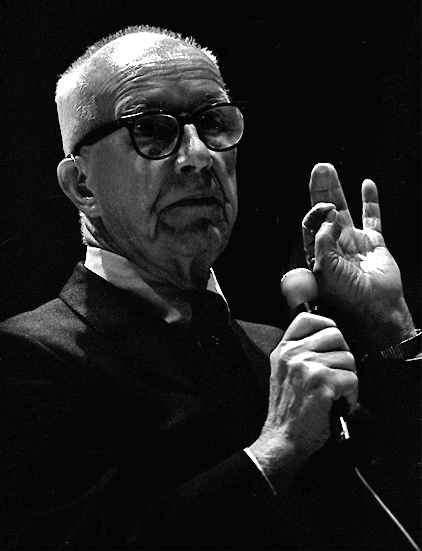
Buckminster “Bucky” Fuller was an architect, systems theorist, futurist, author, and inventor who published over 30 books and coined language now woven into everyday use: Spaceship Earth, ephemeralization, synergetics, tensegrity.
His signature invention, the geodesic dome, distributes structural stress through triangular elements so efficiently that it grows stronger the larger it is — defying intuition. Adopted by the U.S. military for radar stations, demonstrated at world expositions, and built by the tens of thousands worldwide, it remains one of the most structurally efficient large enclosures ever devised.
His Dymaxion House (1928–1946) anticipated nearly every principle of sustainable architecture — rainwater collection, passive ventilation, factory manufacturing — by half a century. His deepest contribution was philosophical: the concept of ephemeralization — doing more with less — and his conviction that the Earth already held the resources to give every human being a high standard of living, if civilization were designed with intelligence rather than competition.
“You never change things by fighting the existing reality. To change something, build a new model that makes the existing model obsolete.” — R. Buckminster Fuller
What Unites Them
These ten men lived in different disciplines, but thread a line through them and the pattern becomes clear:
- They learned from nature rather than against it — Schauberger from streams, Leedskalnin from leverage, Fuller from the geometry of soap bubbles and shells, Ogle from combustion chemistry hiding in plain sight.
- They worked at the edges of their fields, where the established paradigm grew thin and the truly strange became possible.
- They paid a price. Tesla died penniless. Rife died forgotten. Reich died in prison. Schauberger surrendered his life’s work days before his death. Ogle died at 31. Meyer died at 57 at a restaurant, whispering that he’d been poisoned.
- Their ideas are experiencing a revival, as engineers, researchers, architects, and healers rediscover work that was buried rather than refuted.
Whether every claim made by or about these men stands up to rigorous scrutiny is a separate question from whether they were extraordinary thinkers who deserved better from their era. The honest answer is: they were both things at once — visionaries operating at the edge of the knowable, sometimes reaching beyond it, and always demanding that we ask why the world works the way it does.
That question — the one they refused to stop asking — may be the most important invention of all.


